Products & Experiences
Quality and convenient visitor products and experiences are critical to creating memorable journeys and trips for tourists. This includes diversifying the mix of available hotels, restaurants, and attractions to increasing accessibility to these assets and maintaining quality tours, customer service, and experiences that help leave lasting positive impressions of Oakland County.
Goal #4:
To increase connectivity to and accessibility of great outdoor assets for new audiences
Strategies
01
02
03
Unify outdoor recreation assets on a digital platform.
The digital and mobile-friendly one-stop shop for all things outdoors in Oakland County and Metro Detroit would aggregate data across jurisdictions (municipal, county, state) and offer visitors searchable maps and user engagement tools to more easily access what’s on offer/types of experiences at each outdoor asset (e.g. itineraries) and how to best access them (e.g. passes, tickets).
| Level of Effort | Phasing |
|---|---|
 High High |  Near Term Near Term |

Why is this important?
Currently, information about parks is siloed by the management authority (i.e. County, local municipality, Metroparks, State, etc.). As such, the diverse park systems and recreation passes offered across the County can reportedly result in confusion amongst park users who are simply looking to access the outdoors. In fact, stakeholders at focus groups shared that a key challenge for Oakland County is the lack of effective communications about what’s on offer in each nature-related asset or a centralized means to easily access public communications/visitor information across all outdoor recreation facilities.
Case Study: ExploreButteCounty.com (CA)
The ‘Outdoor’ page of ExploreButteCounty features all outdoor recreation assets across the County regardless of owner/manager (local, county, state, private), and organized by the most popular types of activities - i.e. Hiking, Biking, Fishing, Boating. Each key asset is featured on its own dedicated page with an overview description, related media (videos, photos, social posts shared by other users), directions on how to get there, and in some cases, tips for responsible recreation at parks/recreation assets.
Evaluate the feasibility of an on-demand parks service shuttle.
An on-demand parks service shuttle should be evaluated for demand and financial feasibility during a peak season, fixed-route pilot service supported by a transportation provider. The study would evaluate limited-sized passenger vans from key pick-up points across the County (primarily at most-visited downtown locations - Royal Oak, Ferndale, Birmingham, Rochester, Southfield, and hotel/shopping clusters) to top visited outdoor recreation attractions such as Kensington Metropark, Holly State Recreation Area, Bloomer Park, Pontiac Lake State Recreation Area, Bald Mountain State Recreation Area, etc.
| Level of Effort | Phasing |
|---|---|
 Medium Medium |  Future Future |

Why is this important?
In an analysis of consumer sentiments (available through Google) across various outdoor recreation assets, the Destination Diagnostic found limited positive sentiments shared around convenience/access and public transportation at/to these assets. According to stakeholders, the Great Outdoors experiences in Oakland are reportedly disjointed across the County. Many had suggested that in order to get more people to go to and from outdoor recreation to agriculture assets (and downtowns), there is a need to increase alternative transportation access to and from these assets.
Case Study: Lake Link Microtransit Service (Lake Tahoe, CA)
The South Shore Transit Management Association (SSTMA) and its partners undertook several critical early actions to establish the Lake Link on-demand microtransit service, including piloting a dynamic fixed-route shuttle pilot in 2018 with Chariot, a local demand‑responsive transit provider. The pilot program faced challenges with app reliability, marketing, and technology, however, it laid the ground work for SSTMA to raise funding with private partners to seed its next program, the Lake Link, a free and on-demand microtransit service for a defined service area along South Lake Tahoe (crossing State lines). The service, launched in Summer 2022 ahead of the Tahoe South Events Center opening, now features dedicated 5-12 passenger vans with ADA accessibility and space for bikes and skis operating year-round with varying operating hours based on seasonal demand. The service was also designed to connect seamlessly with other fixed-route transit services, enabling it to function as first- and last-mile feeders.
Develop an outdoor recreation ambassador program.
The ambassador program would train community-based volunteers (typically influential locals with large following/audiences or selected County staff) to serve as on-site guides, advocates, and educators for Oakland County’s outdoor recreation landmarks. These volunteers should be able to connect with diverse audiences (e.g. language capabilities, cultures/ethnicities, etc.) and their roles may include: a) Promoting responsible and safe behavior, b) Enhancing the visitor experience by sharing local knowledge through diverse cultures/languages, c) Reporting and supporting park management.
| Level of Effort | Phasing |
|---|---|
| Medium | Near Term |

Why is this important?
Despite reported high quality of outdoor recreation offerings in the County, the beautiful, great outdoors of Oakland remain only for those ‘in the know’. While 79% Metro Detroiters surveyed rated Oakland County’s ‘Nature & Parks/Trails’ as ‘very good’/’excellent’, only 43% of out-of-towners were aware of the quality of these offerings.
Case Study: Vámonos Outside (Bend, OR)
Vámonos Outside is a nature-focused Latine/BIPOC organization established to connect local communities to the outdoors in Central Oregon. Programs spearheaded by the group includes youth and family programming that leads snowshoeing, sledding, hiking and park outings for Latino youth and families.
Case Study: Alabama State Parks Ambassador Program
The voluntary program selects 75 participants to engage with their favorite Alabama State Parks and submit/share social media content (photos, videos) monthly on behalf of their assigned parks. Content submissions may include showcasing activities such as hiking trails, lodge views, camping, and biking, and are used across Alabama State Parks’ marketing and communication channels.
Goal #5:
To nurture popular hometown events and seed new marquee events
Strategies
01
02
Establish a countywide Festivals & Events fund.
The fund would focus on providing financial assistance and marketing support to festivals and events that have the potential to generate off-season room nights and growing and diversifying visitor experiences across the county. Priority should also be given to festivals and events that align closely to the experience pillars of the destination - events that grow curiosity (science, international cultures, art, music), connect visitors to the great outdoors, and activate downtowns and unique corridors. Ultimately, the fund should assist in nurturing and seeding visitor-generating activities and events which, by their own merit, can grow and succeed independently following participation in the program.
| Level of Effort | Phasing |
|---|---|
| High | Near Term |

Case Study: Pittsburgh Festivals & Cultural Events
Why is this important?
According to the County’s 2025 visitor survey, beyond dining/shopping and the great outdoors, Oakland County is a stand-out destination for ‘events and festivals’. The survey revealed that 36% of out-of-towners and 58% of Metro Detroiters rated the events and festivals in the County as being very good/excellent. This is likely due to the County’s track record of hosting homegrown Michigan events year-round, and should be leveraged moving forward to celebrate more diverse cultures and invite more international communities to share in the cultural offerings.
Case Study: Pittsburgh Festivals & Cultural Events Fund Program (PA)
VisitPittsburgh supports the growth and expansion of leisure events through a micro grant program that offers funding of up to $5,000 to event organizers of emerging Pittsburgh events. These funds are intended only to market and grow awareness of the event, grow the scope of the event, or increase the share of out-of-town visitors to the event - for example, through partnerships with hotels.
VisitPittsburgh supports events for a maximum of three years, with sponsorship dollars decreasing by 50% with each subsequent year with the goal that by its final year of funding, sufficient support has been provided to allow event organizers to ‘graduate’ and seed funding from alternative sources. In addition to cash funds, VisitPittsburgh matches support through in-kind advertising dollars.
Set up a multi-hometown marquee event/festival incubator program.
The incubator would be designed as a sprint-style program that would offer a limited series of knowledge and training sessions to equip event organizers/planners, facility/venue managers, community-based organizations, and local businesses with essential tools and information to create and/or expand on a marquee event/festival that spans multiple locations across the County (at least two municipalities). Marquee events and festivals must have the ability to attract more than 50,000 annual participants (may be held over multiple days), and should align closely with the following themes: technology and lifestyle (wellness/sports, culinary, creative, global culture).
At the conclusion of the incubator sessions, one-on-one mentoring and support would be provided and tailored to the specific needs of each participant, and may include specific support with event management and operational needs, marketing, fundraising/sponsorships, etc.
| Level of Effort | Phasing |
|---|---|
| High | Future |
Why is this important?
Current visitor perceptions of distance between clusters of attractions and the physical disconnect between different communities/unique corridors of the County pose critical risks to the County’s visitor economy. These perceptions will need to be overcome by strategically linking events across several locations to motivate visitors to collect stops and experiences on dedicated marquee event days of the year.
To date, this strategy has proven viable with Woodward Dream Cruise, where multiple communities from Detroit to Pontiac participate to organize various activities at a mix of locations, resulting in widespread movement of visitors along the Woodward Avenue corridor.
Case Study: Bellevue Festival & Events Incubator Program (WA)
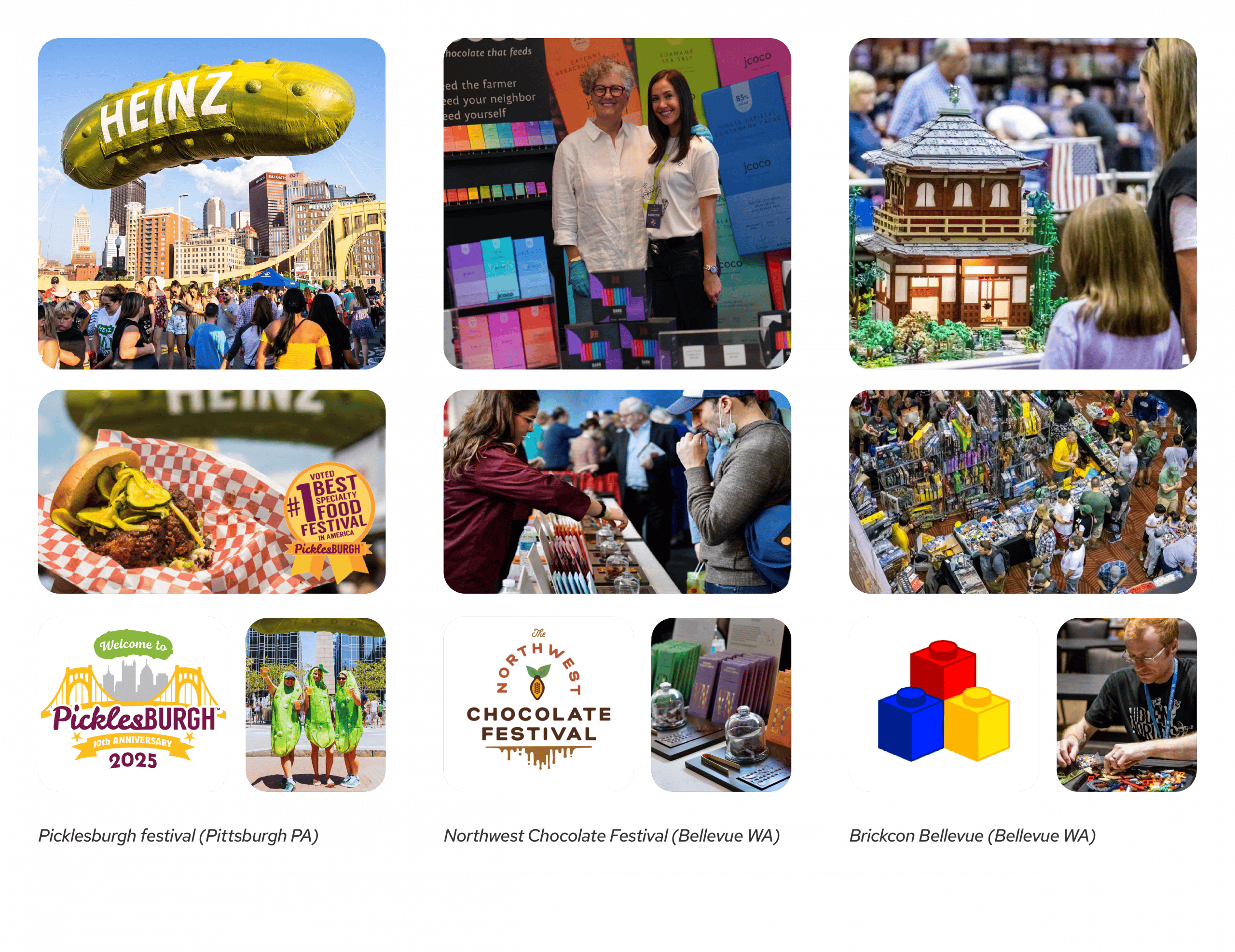
The newly established program is managed in partnership between the Bellevue Tourism Promotion Area, Bellevue’s Lodging & Hospitality Industry, and the City of Bellevue. The program offers expert guidance and resources to ensure long-term success and sustainability of events but also financial support in the range of $7,500-$50,000. The program is primarily focused on supporting events that drive tourism during need months (Jan-Apr, Nov-Dec) and has seeded the growth of several successful Bellevue events including the 2-day Northwest Chocolate Festival, the longest-running Lego fan exhibition in the world BrickCon, and bluegrass and acoustic music festival Wintergrass.
Goal #6:
To create world-class cultural and sporting institutions and experiences
Strategies
01
02
03
04
Create a Cultural & Sporting Tourism Development program.
This program would ensure continued preparedness and readiness of the County’s cultural and sporting institutions and facilities to welcome and serve out-of-towners. It would offer grants to existing non-profit organizations managing cultural and sporting tourism assets and experiences to plan and develop new/enhanced on-site visitor experiences (including multilingual tours, seasonal tournaments/exhibition/programs/festivals/events, activations to animate common spaces, interactive experiences/exhibitions), multilingual signage, other type of group-ready experiences, and staff hospitality training.
| Level of Effort | Phasing |
|---|---|
| High | Near Term |

Why is this important?
Through engagement with industry stakeholders, the Destination Diagnostic uncovered ongoing challenges with consumer demand and spending that are impacting local institutions. Cultural institutions in the County, in particular, shared collectively that overall visitation to museums has declined in recent years and that attendance rates have not returned to 2019 levels (pre-COVID). Many have suggested that this is indicative of the industry nationally and will need to be mitigated as public funding for arts and culture is unlikely to grow in the coming years.
Stakeholders also shared success in driving visitor traffic through the doors of cultural institutions through pop-up events and once-in-a-lifetime experiences such as after-dark events. As such, creating resources for such attractions to diversify and grow their on-site visitor experiences will be critical to ensuring their sustainability as tourism assets.
Case Study: New Jersey Historic Trust’s Heritage Tourism Grants
The grant program provides a 3:1 funding match of up to $75,000 to municipalities or non-profit organizations seeking to develop interpretive signage, trainings, workshops, and other visitor-ready experiences to be hosted at historic sites.
The goal of the grant program is to enhance visitor experiences at historical sites and ensure visitor-readiness of key assets in preparation for the semiquincentennial anniversary of the Revolutionary War.
Case Study: UPLIFT NC Tourism Incubator & Accelerator
UPLIFT is a 9-session program that aims to support rural NC business, site, and attraction managers to strengthen their tourism operational skills. Through the sessions, participants are equipped with tourism-specific knowledge and skills in subjects such as management, marketing, funding, and partnership building among others. In addition to the 9-session speaker and group sessions, participants receive supplementary 1-on-1 support and mentorship to address participants’ specific needs.
Curate an Oakland Architectural History trail/event.
The architectural trail for Oakland County would be a new county-wide, or regional, product that celebrates the diverse architecture and urban design of Oakland County and Metro Detroit. Designed as an annual weekend trail and/or event, the County could help launch an “Open House Metro Detroit” event that would offer visitors access to hundreds of sites to visit, tour, experience talks/performances, and other special events (similar Open House New York). The product should be designed through partnerships with regional architectural and planning communities (e.g. local chapter of the American Institute of Architects, design schools, historic preservation groups).
| Level of Effort | Phasing |
|---|---|
| Medium |  Immediate Immediate |

Why is this important?
Metro Detroit is rich in historic architecture and iconic landmarks, including in Oakland County. More than just sites and sights, these buildings and neighborhoods often weave stories of the region’s rich Motor City history. To complement existing attractions such as Meadow Brook Hall and the County’s countless Historic Districts, a trail product centered on historic architecture can be designed to help encourage visitors (particularly ones with a flair for history or design) to explore communities across the County and change their perception of distance within the County.
Case Study: Open House New York (NY)
Founded in 2001, Open House New York (OHNY) joined an existing international network of non-profit organizations (Open House Worldwide) advocating for public access to architecturally significant sites (private buildings, infrastructure, design studios). The weekend-long event was seeded by partnerships with architectural and planning communities (AIA New York, NYC-based architecture/ design schools, preservation groups) and primarily funded by philanthropic funding and sponsorships from architecture firms and cultural foundations. OHNY piloted its first year with volunteers from the local architectural community and with participating locations across all boroughs to motivate visitors to explore neighborhoods beyond Manhattan. OHNY’s network of partners has continued to grow as the OHNY platform has grown, offering partners and sponsors wide PR and marketing opportunities.
Case Study: Destination Madison’s Discover Frank Lloyd Wright (WI)
In April 2025, Destination Madison unveiled the “Wright in Madison” free, digital architectural trail spotlighting Frank Lloyd Wright’s legacy in the city. The trail was developed in close collaboration with key institutional partners, including the Frank Lloyd Wright Foundation and Taliesin Preservation. Designed as a self‑guided trail, visitors are able to sign up for free access to the digital trail (hosted on the Bandwango platform, mobile-friendly), check-in at locations on the trail, and earn points toward prizes such as Frank Lloyd Wright-themed merchandise.
Expand the Detroit Culture Pass.
The Detroit Culture Pass is a pilot membership program that increases universal access to arts and culture, particularly for families that typically face financial barriers to participate in the arts. The program is primarily funded by the Gilbert Family Foundation and is partnered with Detroit Housing Network, Connect Detroit, and five City of Detroit arts and cultural organizations: Charles Wright Museum of African American History, The Detroit Historical Society, The Detroit Institute of Arts, The Detroit Opera, and The Detroit Symphony Orchestra. Program participants get unlimited access to participating cultural institutions and receive transportation support to attend free special events and performances.
As such, there is immense potential and need to build on the success of the program and expand the program to include other arts and culture organizations and institutions beyond the City, for example Cranbrook Institute of Arts, Meadow Brook Hall, and the Zekelman Holocaust Memorial Center.
| Level of Effort | Phasing |
|---|---|
 Low Low | Immediate |

Why is this important?
The Metro Detroit visitor is a critical audience for Oakland County as loyal regional visitors & destination ambassadors. This visitor has likely been to Oakland County in the past, is somewhat familiar with its offerings, and is more likely to recommend Oakland County to friends and family. As such, it is important that the County finds ways to lower financial barriers for Detroit families to easily access arts and culture experiences in the County and grow their loyalty as consumers and visitors.
Build on Main Street Oakland County’s digital marketing webinars and resources.
Main Street Oakland County has developed a robust and comprehensive set of resources and training opportunities for its Main Street partners, including resources focused on digital marketing. To build on this training series, the County should expand the program to include branding and marketing services and training specific to cultural institutions/non-profit organizations and their unique audiences.
| Level of Effort | Phasing |
|---|---|
| Low | Immediate |

Why is this important?
Industry stakeholders collectively shared that they have seen the power in social media, organic sharing, word-of-mouth referrals. However, not all of the County’s cultural institutions and assets have been able to leverage this channel. As such, there is a clear need to establish resources that will help ensure that individual organizations’ brand and marketing reaches young talent and diverse audiences. In particular, these resources and 1-on-1 support will be needed to address shortcomings with under-resourced cultural organizations/ institutions, and newly-formed and emerging assets like the Pontiac Transportation Museum.
Case Study: Western Museums Association’s Digital Empowerment Project
The Digital Empowerment project is a pilot program of the Western Museums Association, a nonprofit membership organization dedicated to serving museums, museum professionals, and related institutions. The program produced a series of ten digital media and technology modules with hands-on, step-by-step training sessions by museum technologists and featuring case studies from peer museum practitioners. Following the first year of the project, the resources and training materials were made publicly available for non-members to access.